Ethiopian New Yearእንቁጣጣሽ
September 12, 2027 · Meskerem 1, 2020 E.C. · in 339 days
Enkutatash is the Ethiopian New Year — the first day of the month of Meskerem, when the long rains lift, the highlands turn gold with Adey Abeba daisies, and families gather to wish one another a bright year ahead. Because Ethiopia keeps its own ancient calendar, the new year arrives in September rather than January, and the year number runs about seven to eight years behind the Gregorian count.
What does Enkutatash mean?
The name Enkutatash (እንቁጣጣሽ) is usually translated as “gift of jewels.” Tradition ties it to the Queen of Sheba: when she returned to Ethiopia from her famous visit to King Solomon in Jerusalem, her chiefs are said to have welcomed her home by replenishing her treasury with enku — jewels. The word has been linked to that homecoming and to the renewal that the season brings ever since.
Enkutatash also lands at a naturally hopeful moment. It marks the end of kiremt, the heavy rainy season, and the start of the sunny spring that follows. Rivers run clear, the fields are green, and the Meskel daisy blooms across the countryside — a living signal that a new year has begun.
How Enkutatash is celebrated
The celebration begins the night before with bonfires and song. On new year's morning, children — especially girls — dress in traditional white clothes, go from house to house singing “Abebayehosh,” and hand out small bouquets of Adey Abeba, the bright yellow daisy of the season. In return they receive a little money, bread, or roasted grain.
Families share a festive meal built around injera with doro wat (spiced chicken stew) and other dishes, brew fresh coffee in a jebena, and visit relatives and neighbours. In Orthodox Christian tradition the day also honours John the Baptist, and many attend church services that carry into the celebration.
How to say Happy Ethiopian New Year
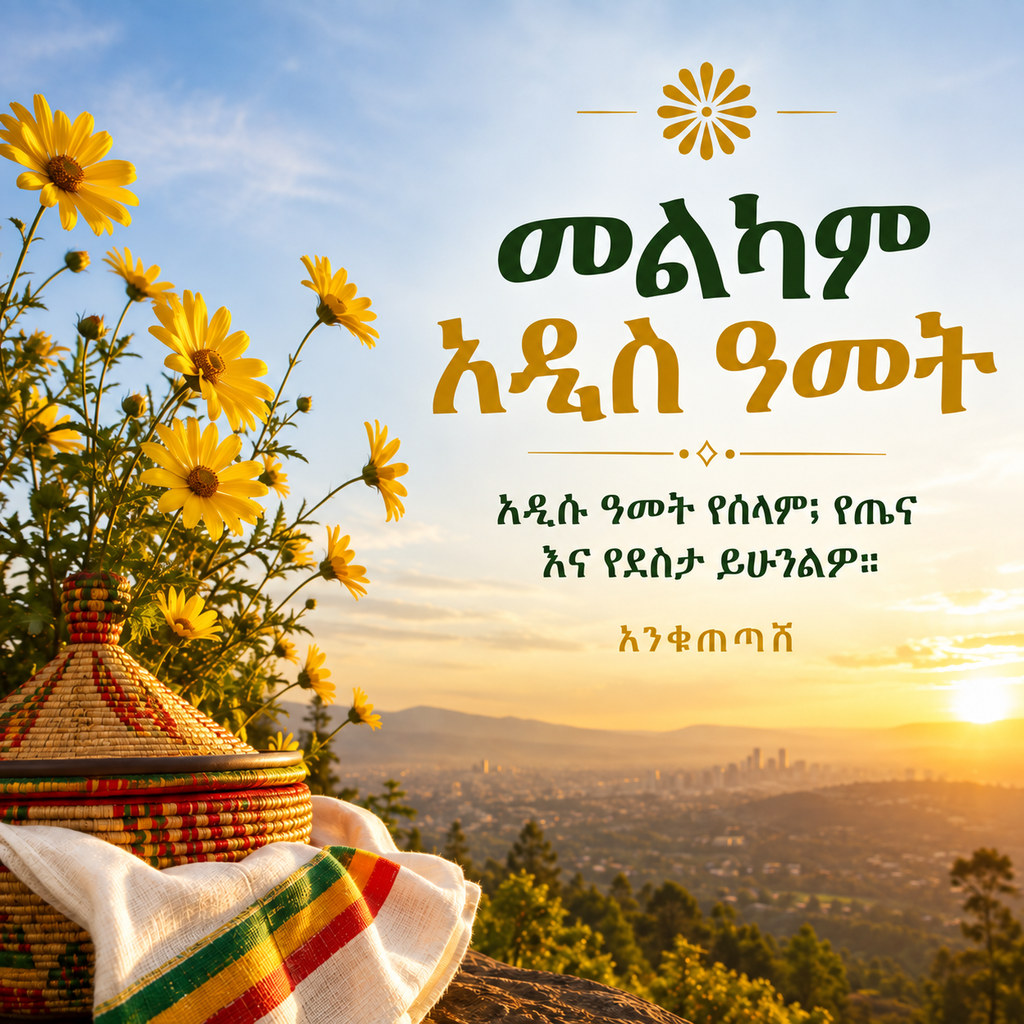
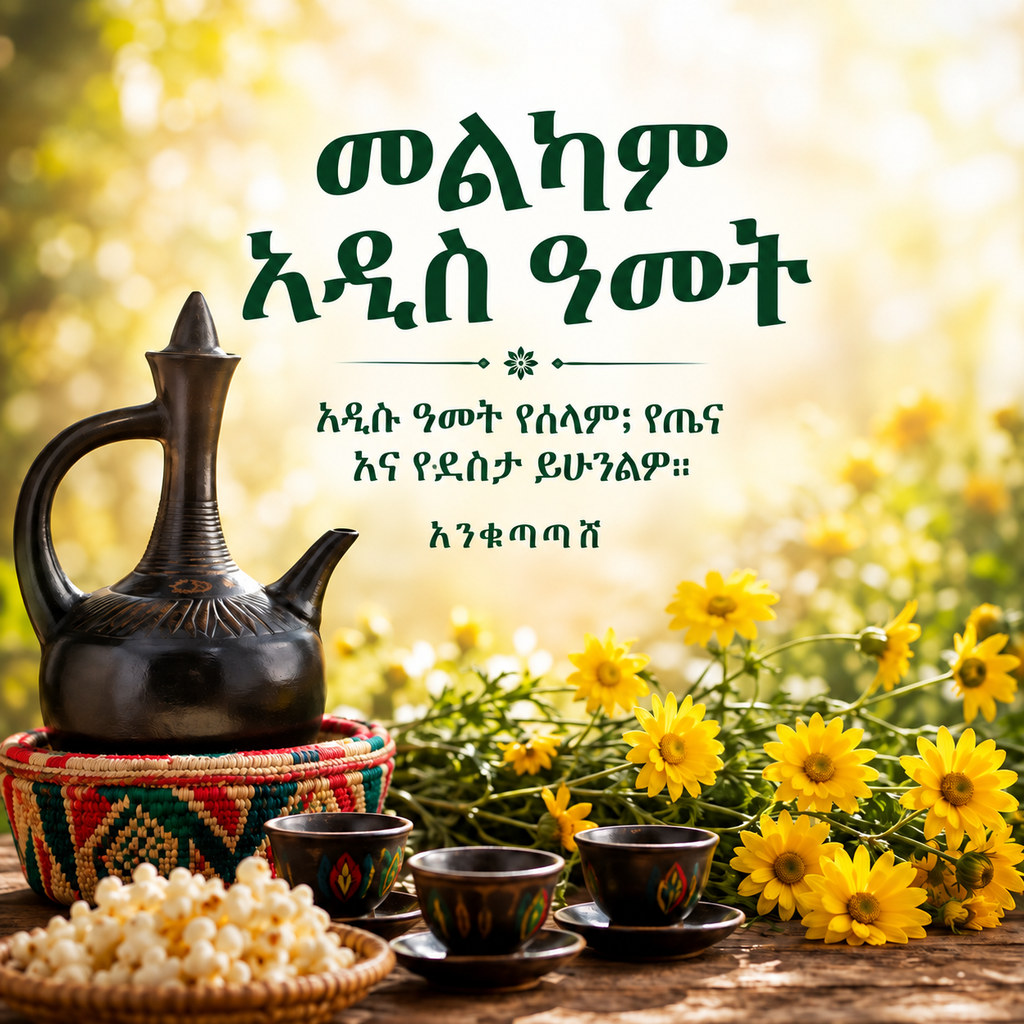
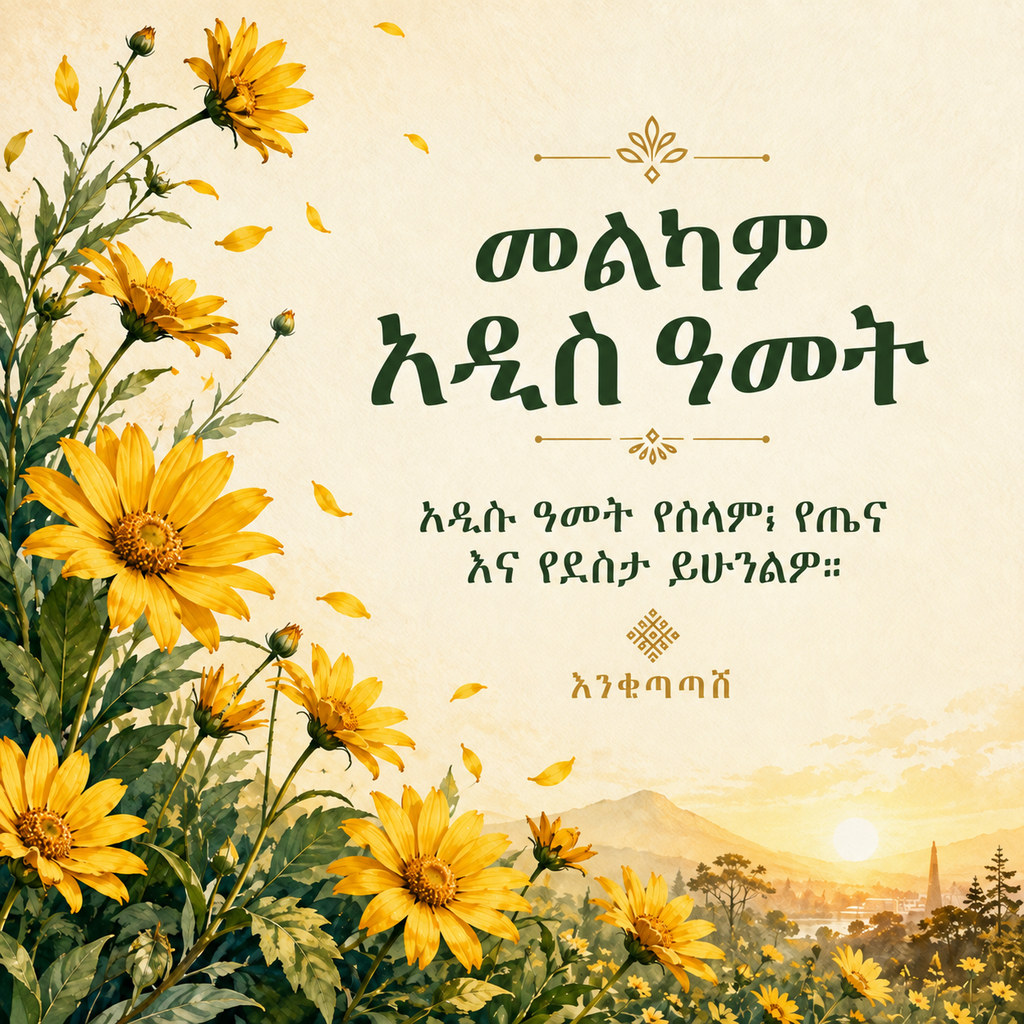
The most common greeting is “Melkam Addis Amet” (መልካም አዲስ ዓመት), which simply means “Happy New Year.” You may also hear “Enkuan aderesachihu” — roughly, “congratulations on reaching this day.” A greeting card in Amharic or English is a warm way to reach family and friends near and far.
Greetings in Amharic
- መልካም አዲስ ዓመትMelkam Addis Amet“Happy New Year”
- እንኳን ለአዲሱ ዓመት አደረሳችሁEnkuan Le'adisu Amet Aderesachihu“Congratulations on reaching the new year”
Share an Enkutatash greeting card
Free Ethiopian New Year cards to send to family and friends. Download or share straight to your chats.

Frequently asked questions
When is Ethiopian New Year?
Enkutatash falls on Meskerem 1 in the Ethiopian calendar, which is 11 September on the Gregorian calendar in most years, and 12 September in the year immediately before a Gregorian leap year.
Why is the Ethiopian year different from the Gregorian year?
Ethiopia uses the ancient Ge'ez calendar, which calculates the date of the Annunciation differently from the Western church. The result is a calendar that runs about seven to eight years behind, with thirteen months, and a new year in September.
What is the yellow flower associated with Enkutatash?
It is the Adey Abeba (Meskel daisy), a golden-yellow wildflower that blooms across the Ethiopian highlands at the end of the rainy season, right around the new year.
More Ethiopian holidays
 Meskel — Finding of the True CrossመስቀልSeptember 28, 2027
 Timket — Ethiopian EpiphanyጥምቀትJanuary 19, 2027
 Genna — Ethiopian ChristmasገናJanuary 7, 2027
 Fasika — Ethiopian EasterፋሲካMay 2, 2027
 Victory of Adwaየአድዋ ድል በዓልMarch 2, 2027
 Siklet — Ethiopian Good FridayስቅለትApril 30, 2027
 Eid al-Fitrዒድ አል ፈጥርMarch 9, 2027
 Eid al-Adha (Arefa)ዒድ አል አድሐMay 16, 2027
 Mawlid — Birth of the ProphetመውሊድAugust 14, 2027
 Martyrs' Day (Yekatit 12)የሰማዕታት ቀንFebruary 19, 2027
 Patriots' Victory Dayየአርበኞች ቀንMay 5, 2027
 Nations, Nationalities & Peoples' Dayየብሔር ብሔረሰቦች ቀንDecember 8, 2026
 International Labour Dayየሰራተኞች ቀንMay 1, 2027